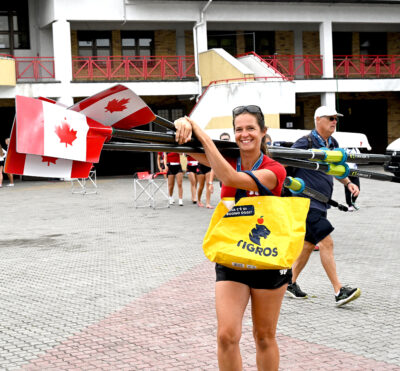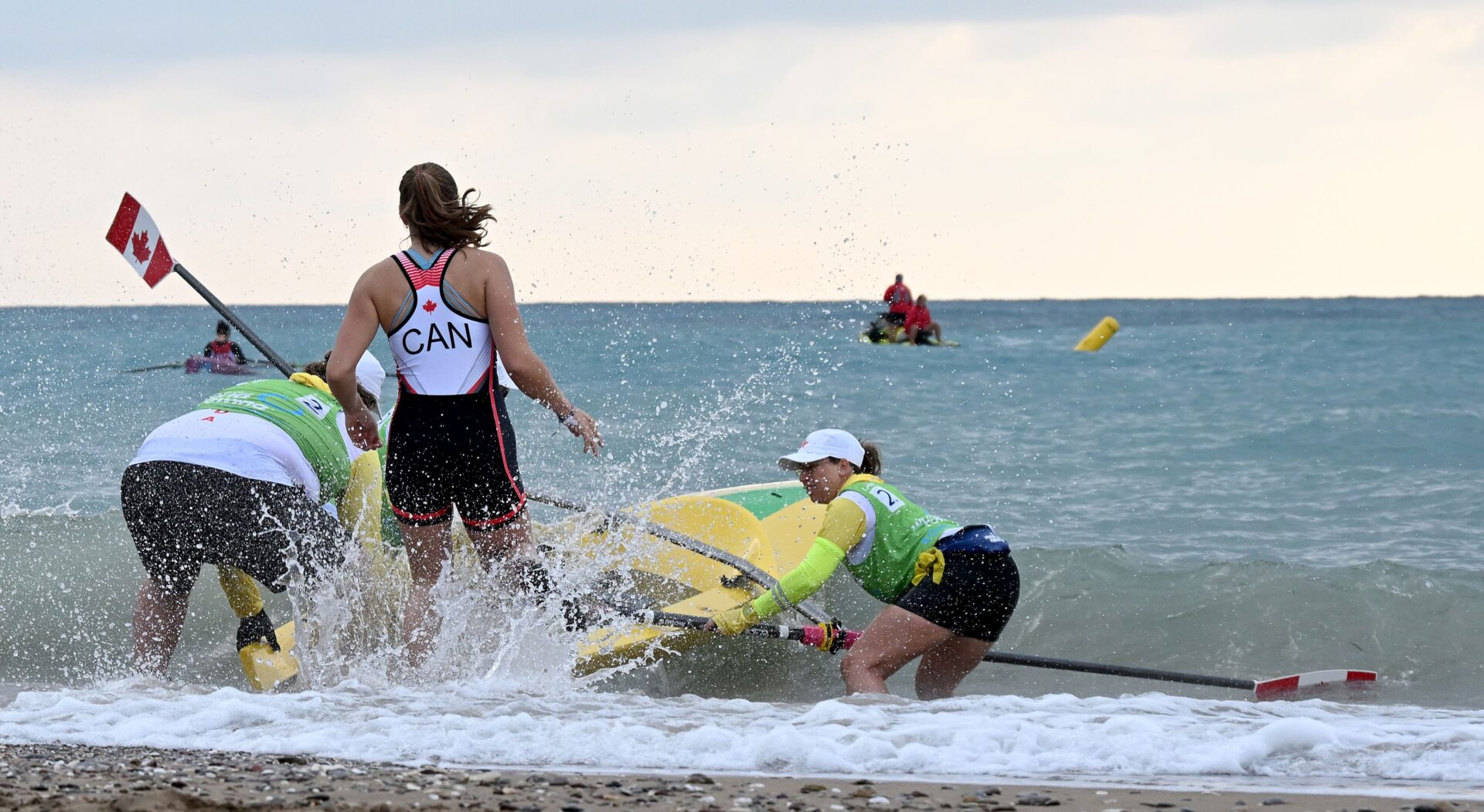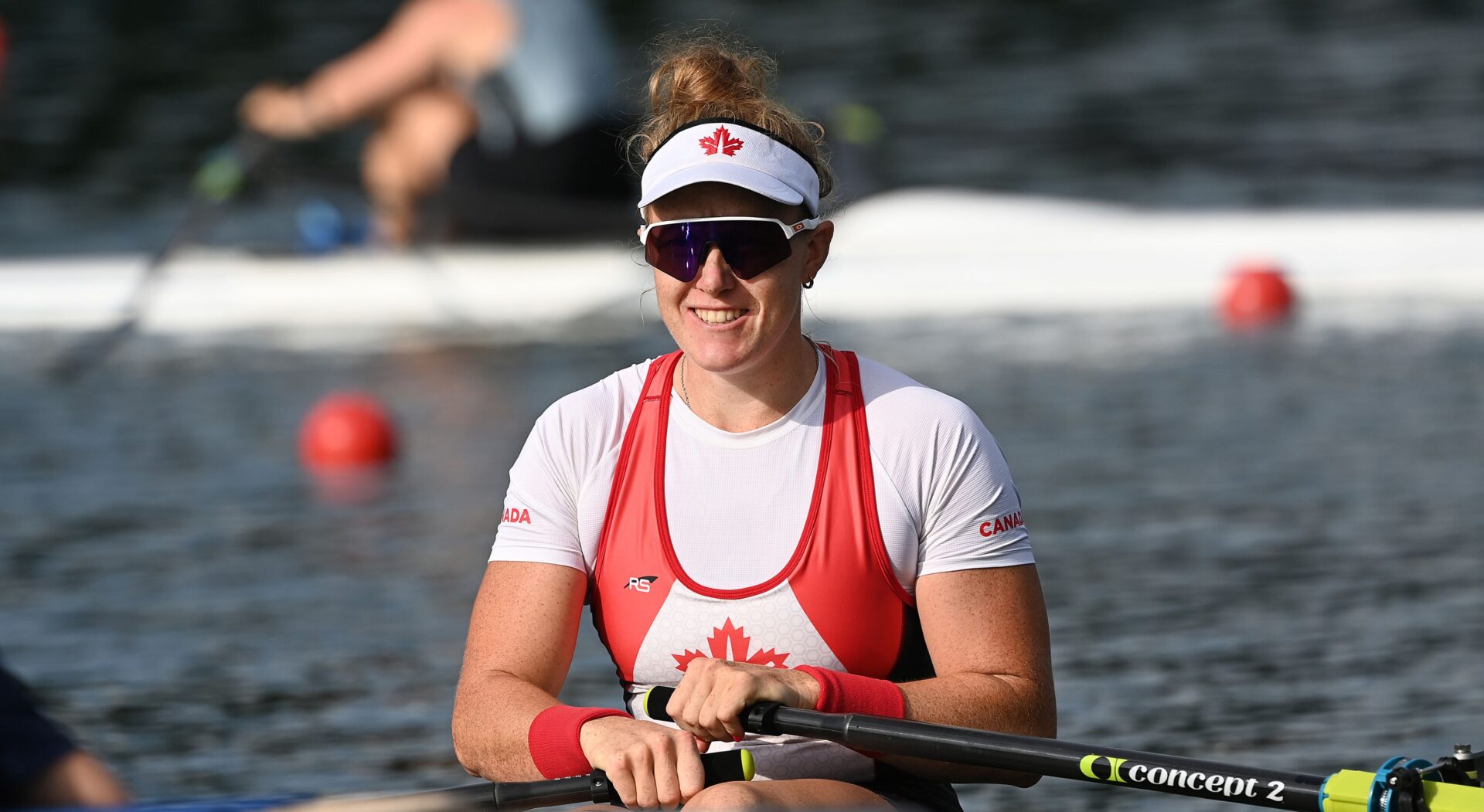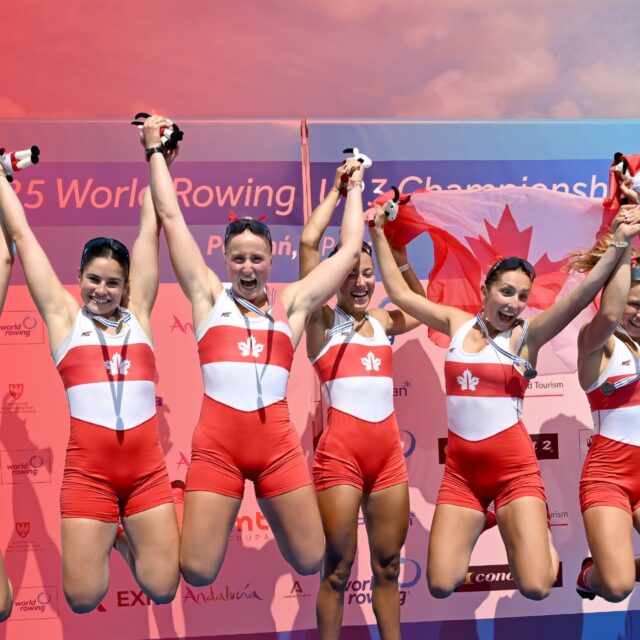
The members of the National Rowing Team are grateful for all the support that they receive both during training and at regattas. When competing abroad it is inspiring to have the encouragement of Canadian rowing fans, also known as the die-hard "SUPPORT'OARS!"
A guide for supporters has been created and is useful for those who may travel to international regattas.
•Download RCA Supporters' Guide in pdf
On this page, check out some bulletins, useful links and race-watching tips .

• For those traveling to Beijing for the Olympics - see this important link to information on Canada Olympic House .
• Info on Paralympic Games' tickets for friends and family here .
• NEW: Join the Supporters' Facebook group and share info (note: you must be a member of Facebook). Also please contact Anne Light if you would like to be added to the Supporters' e-mail list.
•Web site for Supporters of Canadian Paralympians developed by the Canada Paralympic Committee
• Beijing Ticket Order Form (pdf file - please read carefully before submitting)
Thanks to all those who made the trip to Munich, Germany, for the World Championships. Canadian summaries and results can be found here .
The hotels listed in team itineraries are the team accommodations during this time; in accordance with National Team policy, we ask that friends and family do not stay with the team. Contact your travel agent for other local accommodations. This policy was developed to help team members focus during the competition. The hotel contact info is provided in case of emergency.
www.worldrowing.com - the international rowing federation, includes information on Junior, Under-23 and Senior World Championships.
www.olympic.ca - info on Canada's Olympic team. The COC funds the Olympic movement in Canada and administers the Olympic team.
www.row2k.com - rowing news updated daily
www.rowingnews.com - independent rowing publication based in the U.S.
T
he crew that is making it look easy is most likely the one doing the best job. While you're watching, look for:
• Continuous, fluid motion of the rowers. The rowing motion shouldn't have a discernible end or beginning.
• Synchronization. Rowers strive for perfect synchronization in the boat.
• Clean catches of the oarblade. If you see a lot of splash, the oarblades aren't entering the water correctly. The catch should happen at the end of the recovery, when the hands are as far ahead of the rower as possible. Rowers who uncoil before they drop the oarblades are sacrificing speed and not getting a complete drive.
• Even oarblade feathering. When the blades are brought out of the water, they should all move horizontally close to the water and at the same height. It's not easy, especially if the water is rough.
• The most consistent speed. Shells don't move like a car - they're slowest at the catch, quickest at the release. The good crews time the catch at just the right moment to maintain the speed of the shell.
• Rowing looks graceful, elegant and sometimes effortless when it's done well. Don't be fooled. Rowers haven't been called the world's most physically fit athletes for nothing. A 2,000-metre rowing race demands virtually everything a human being can physically bring to an athletic competition - aerobic ability, technical talent, exceptional mental discipline, ability to utilize oxygen efficiently and in huge amounts, balance, pain tolerance, and the ability to continue to work when the body is demanding that you stop.
• Race times can vary considerably depending upon the course and weather conditions. Tailwinds will improve times, while headwinds and crosswinds will hamper them.
• If a crew "catches a crab," it means that oar blade has entered the water at an angle instead of perpendicularly. The oar blade gets caught under the surface and will slow or even stop a shell.
• A "Power 10" is a call by the coxswain for 10 of the crew's best, most powerful strokes. Good coxswains read the course to know how many strokes remain for their crew to count down to the finish.
• Crews are identified by their oar-blade design.
• It doesn't matter whether you win an Olympic medal or don't make the finals -- each crew will carry their boat back to the rack.
• Coxswains from first-place boats worldwide are thrown into the water by their crews.
• Coxswains do not, and probably never did, yell "stroke! stroke!" Similar to a jockey, his/her job is to implement the coach's strategy during the race, in addition to steering and letting the rowers know where they stand in the race and what they need to do to win.
Also see the glossary section.

| |